Last week, we chronicled the rise of the “Simulation” in a post for the Liberal Patriot, describing how the immersive and immensely addictive social media layer of the modern internet has rearranged the fabric of reality and undermined our autonomy:
“Algorithms now decide what we see and what we don’t, modeling our deepest proclivities to strike at our psychological weak points—our hopes, our fears, and our insecurities. In an echo of [B.F.] Skinner’s experiments, these platforms employ the powerful rewards of entertainment, stimulation, and social validation to ‘gamify’ our very existence with the result of altering our behavior to keep us returning for more.
Pushed to its logical extreme, modern social media has transformed into an all-consuming addiction machine—call it the ‘Simulation’—that rearranges our experience of reality around whatever drives our engagement and, in turn, generates ad revenue from our attention.”
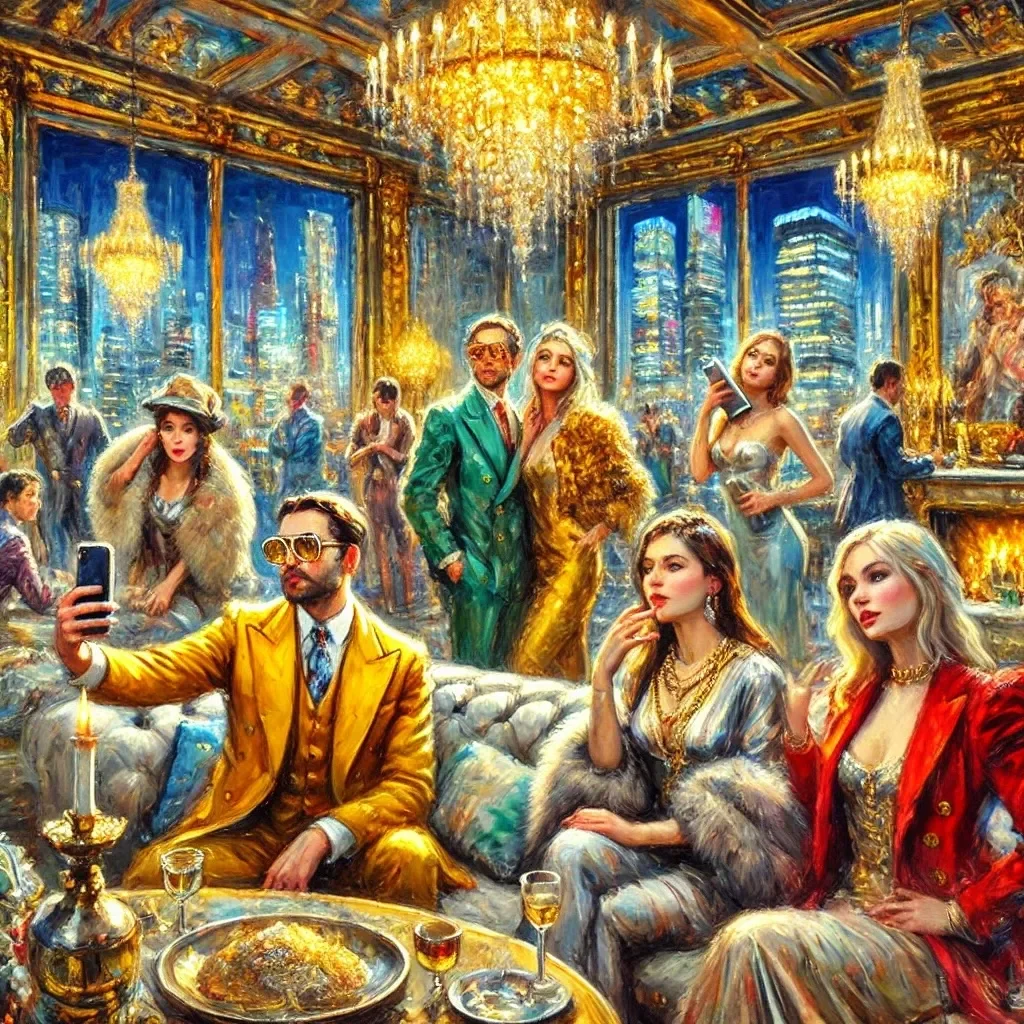
The Simulation is increasingly subsuming the components and functions of traditional society and replacing them with something new and uncanny. Every social structure has an aristocracy of some kind — a class of elites who reap the full privileges and benefits of their society — and the Simulation is no different.
In a recent appearance on Joe Rogan’s podcast, Mark Zuckerberg himself seemed to acknowledge and welcome this new reality, suggesting that today’s “cultural elite class” be “repopulated with people who people actually trust” — specifically a “whole new class of creators” who just so happen to make content on social media platforms like his own.
From creators like Rogan to Charli D’Amelio to MrBeast and beyond, “Attention Aristocrats” of every stripe have soared to prominence by continuously feeding the Simulation with the attention-grabbing material that keeps us hooked and perpetually scrolling. In return for our attention, they receive vast amounts of status, wealth, and influence.
Social media platforms and the companies that operate them effectively enlist these Attention Aristocrats as foot soldiers to keep their own corners of the digital world stirred up and dependent on a constant stream of content. Many fans form parasocial bonds with these creators: one-sided attachments where we feel intimately connected to them, even though they know virtually nothing about us. Whatever their message — true or false, benign or dangerous — what matters most is that we remain glued to our feeds. Many of these new voices do not adhere to any maxim (moral, professional, or otherwise) other than the universal imperative of maximizing engagement through any means necessary.
As the scholar Renée DiResta argues, a number of these Attention Aristocrats have become the “invisible rulers” of our modern era, quietly shaping public opinion through all kinds of algorithmically-boosted propaganda. Some of these parasocial propagandists push new lifestyles, like wellness influencers touting raw milk or selling workout programs and AG1 supplements, while others promote dubious paths to wealth, such as remote “high ticket sales” gigs or multi-level marketing schemes. In each case, they promise to fulfill our craving for meaning and community and transform our lives for the better.
The result is an ironic cycle in which the Simulation rewards those who offer “solutions” to our feelings of emptiness and isolation by exploiting and exacerbating those same feelings.
DiResta highlights a specific type of Attention Aristocrat whom she calls the “Persecution Profiteer”. These creators built their brands around the idea that they alone speak truth in a world filled with manipulation. They market themselves as scrappy outsiders, championing the public against powerful elites who want to silence or oppress them. But, as DiResta points out, for all of their anti-establishment rhetoric, these polemicists are themselves part of the new elite. By warning us of imminent manipulation, they perpetually generate fresh waves of content that keep followers hooked, ensuring more likes, more views, and more revenue for themselves.
The controversial influencer Andrew Tate offers a particularly stark glimpse into how Persecution Profiteers can harness the Simulation for fame and fortune. By issuing provocative statements, calling out real and imagined opponents, and championing a conspiratorial “redpill” worldview, he has earned millions of followers — and dollars — within the Simulation. In a nod to the cult classic Keanu Reeves films, Tate’s message is that men are having their freedom suppressed by an all-encompassing, elite-run system of control and manipulation that he calls the “Matrix.” In between relatively straightforward pieces of self-help advice, he suggests that the Matrix exercises its power by propagating anti-masculine cultural values and urges his fans to “take the red pill” to break free. Tate’s $50-per-month online training and mentoring program (ironically renamed from “Hustler’s University” to “The Real World”) claims to show subscribers the path to success and liberation from the Matrix.
What Tate and his fans neglect to recognize is that the mechanism of manipulation they decry is not rooted in the Matrix but in the Simulation itself and its incentives. Far from being a lone rebel exposing sinister forces of control and deception, Tate is part of the same kind of system he rails against, reaping massive profits while delivering a mirage of agency that, in reality, only leads to further manipulation. Instead of escaping the Matrix, Tate has simply learned how to harness it for his own benefit.
The rise of the Persecution Profiteers illustrates how the Simulation’s addictive, profit-driven design can twist the potential for free expression into a mechanism of manipulation. While there are plenty of talented creators who produce content that is factual, entertaining, and genuinely worthy of our precious time and attention, far too many Attention Aristocrats accrue vast wealth and power by exploiting their own audiences.
The oligarchs of modern social media are quick to tout a freer and more honest age full of colorful new voices who “give it to me straight,” but the Simulation simply replaces one class of elites with another. The great Pete Townshend’s enduring warning still applies: we should be just as wary of the new boss(es) as the old.