This piece was originally published in The All American’s Of One, Many anthology.
Today’s politics fuses tribalism with nihilism into a concoction so deadly that it threatens belief in the nearly 250-year-long experiment in American democracy. Across the spectrum, Americans build walls and enact rigid purity tests that decide who is welcomed as “us” and who is cast out as “them.” The social media platforms where we engage with each other and consume news about what’s happening in our society reward outrage, punish nuance, and shrink our sense of what this country can be; anyone who diverges from their tribe’s script is cast out.
On the right, attempting to engage in frank and critical conversations about America’s historical sins—and, specifically, what to do about the ways in which they still haunt us—can bring swift exile. On the left, praising the nation’s achievements, celebrating the progress it has made, or voicing patriotism can do the same. One side seems to believe salvation requires glazing over America’s faults and ostracizing those who seek to address them; the other suggests that the faults are fatal and patriotism itself is bigotry.
Members of Gen Z have watched this across-the-spectrum, Internet-fueled illiberalism collide with the painful reality of a government too paralyzed to solve our biggest problems. We empathize with the disillusionment of our peers, yet our own life experiences have shown us both the darkness and the light of the American story—its peril and its promise.
What the current moment demands is a recommitment to the practice of liberal patriotism: clear‑eyed enough to recognize and address betrayals of our ideals, hopeful and patriotic enough to believe in and keep fighting for them. That spirit—critical, loving, and radically accepting all at once—is American Universalism.
Our personal histories and experiences have informed our passion for the America that we love and believe is still within reach.
Hannah
The principles of American Universalism were inextricably woven into the stories that raised me and went on to define me. The profound sacrifices of my family during a dark period in American history, Japanese internment, act as a guiding light during this equally dark societal inflection point.
My great-grandfather and great-uncle risked their lives overseas to fight for a country that was at the same time incarcerating their loved ones back home, stripping them of all property and generational wealth. For my great-uncle Richard to receive two Purple Hearts, only to be denied membership in the Veterans of Foreign Wars because of Japanese heritage—despite generations of American citizenship—is a brutal reminder of the ways fear has been weaponized at the expense of others throughout American history.
In my family, stories of Japanese internment were never told with scorn or resentment. They were told in solemn recognition that the same nation we cherish had also wronged us in ways that were indefensible.
I have never been under the illusion that the United States is without its flaws; yet I know those flaws coexist with the uniqueness of American opportunity. To disregard the value of American Universalism is to forgo the opportunity to learn from the past and pave a better path for others.
Hugh
My understanding of American Universalism comes from what I have learned from the late civil rights leader and Congressman John Lewis, with whom I was lucky to spend a meaningful amount of time while I was growing up.
When Congressman Lewis spoke of America’s long, unfinished quest for justice and freedom, he combined deep love and hope with pragmatic realism. Quoting his friend Dr. King one moment and Hegel the next, Congressman Lewis framed history as “spiritual warfare between what is good and what is evil… between the forces of light and the forces of darkness.”
He knew that darkness better than most of us ever will. Beaten by police and mobs, jailed for nonviolent protest, he was no stranger to the terrible atrocities Americans can inflict upon each other. He remained a lifelong champion of getting into “good trouble” whenever injustice appeared.
Congressman Lewis also witnessed the triumph of light. He saw firsthand the journey from Selma’s Bloody Sunday to the election of the first Black president. He forgave a man who apologized for having once beaten him at a South Carolina bus station, and he urged everyone—regardless of race, creed, or ideology—to “love everyone.”
Above all, he never stopped believing we could build Dr. King’s “Beloved Community,” in which all could thrive here in the United States. Acknowledging our nation’s capacity for harm and moral failure did not, for him, invalidate the prospect of the American experiment or render that Beloved Community a utopian fantasy. He refused to excuse injustice, but likewise refused to excuse a surrender of hope for an America that works for all of its citizens.
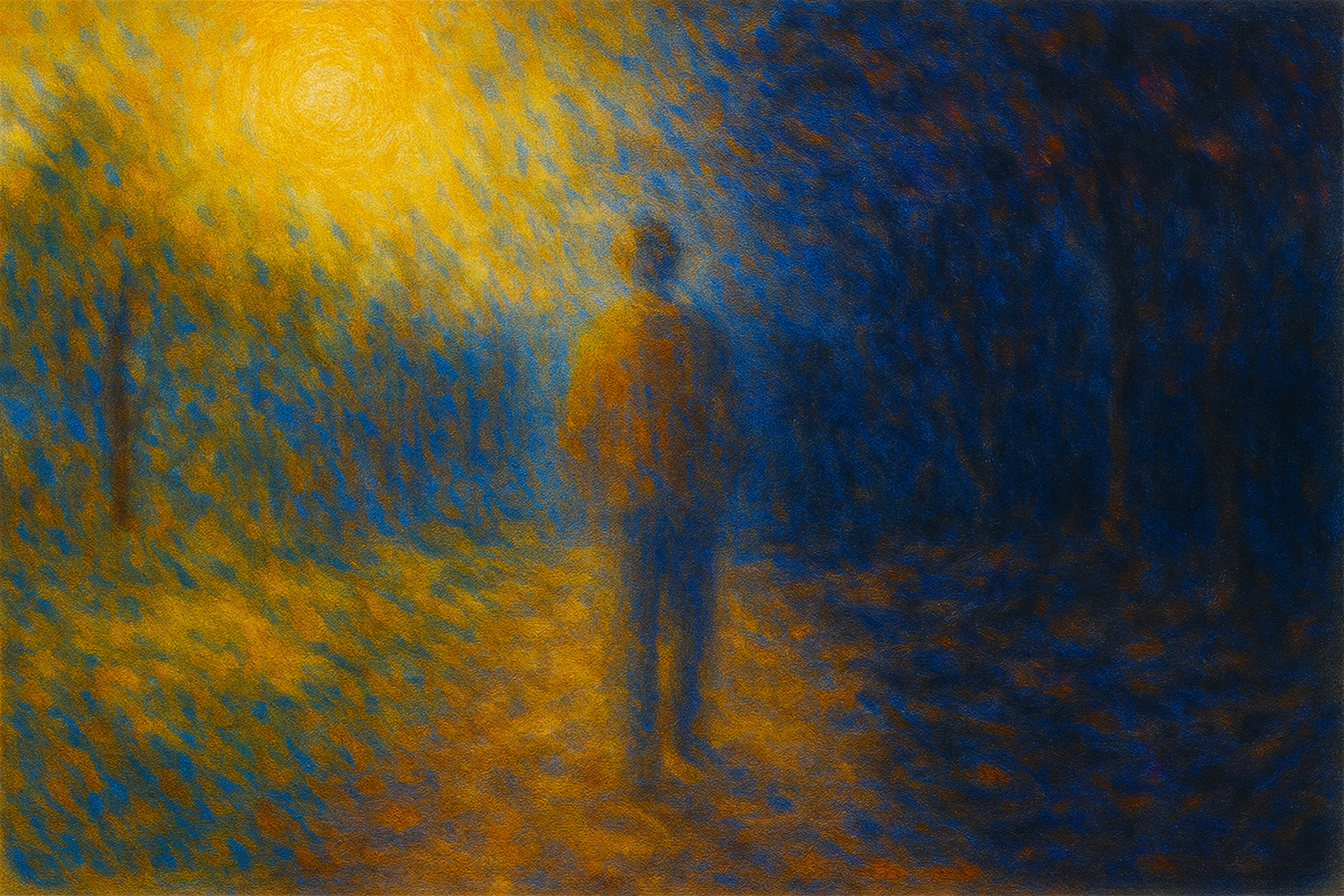
American Universalism asks us to hold two important truths at once: that the United States has never fully lived up to its founding creed, and that its creed remains worth fighting for precisely because it contains the seeds of redemption. Hannah’s family story, marked by sacrifice amid incarceration, reminds us how fear of each other can distort our ideals. Hugh’s memories of John Lewis show how courage can realign us with them. Together they illuminate a paradox at the heart of our history: triumph and transgression—the light and the dark—travel side by side, and both are unmistakably ours.
Our generation, raised in an Internet age that foments outrage, nihilism, and tribalism, must reject both the nostalgia that airbrushes injustice and the fatalism that dismisses the prospect of an America that is both great and good. As heirs to the unfinished work and unmatched promise of the American experiment, we can choose to be stewards of renewal rather than curators of viral grievance: breaking free of outrage algorithms, seeing the full humanity in every neighbor, and recommitting each day to the practice of American Universalism—the conviction that each of us belongs within the circle of “We the People.” By building coalitions wider than our wounds and stronger than our fears, we move closer to the Beloved Community that history and hope still insist is within reach.